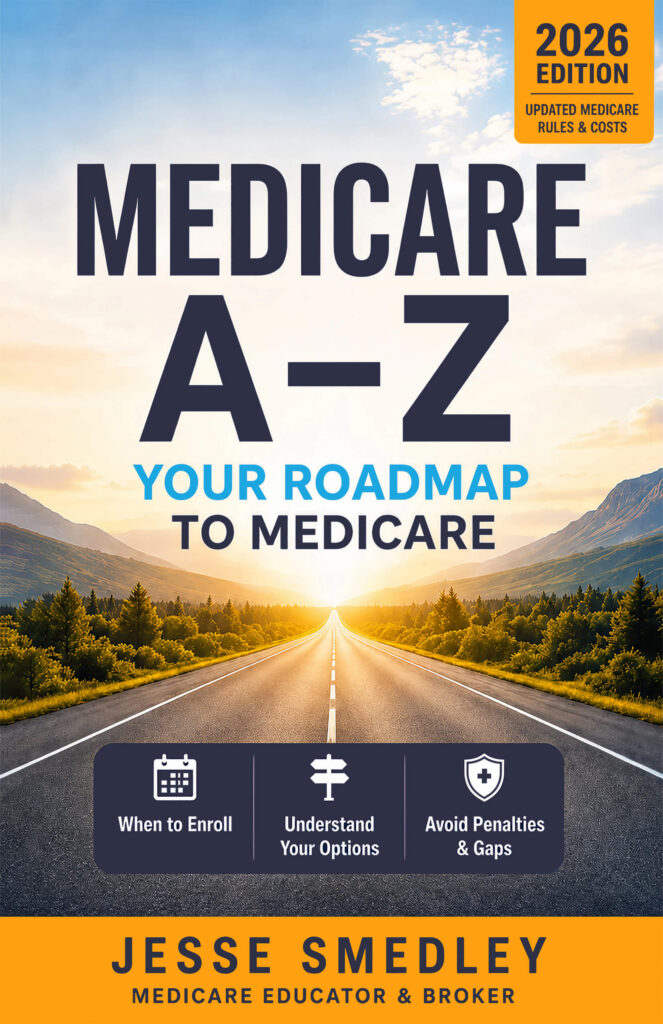

Jesse Smedley is a Principal of Oakbridge Insurance and the founder of iHealthBrokers. He founded iHealthBrokers in 2007, and Oakbridge acquired iHealthBrokers in 2025. He has spent nearly two decades teaching people how to save money on their health insurance and navigate Medicare, and he is the author of Medicare A to Z: Your Roadmap to Medicare.
Medicare Advantage (also known as Medicare Part C) is an alternative to Original Medicare. It has become increasingly popular in recent years, but you may be surprised to know that many carriers and providers are dropping their MA plans!
Medicare Advantage Basics
Although they are fundamentally different than Original Medicare, all plans must include at least the same benefits. However, many plans include additional benefits such as Dental, Vision, Hearing, and Prescription drugs to entice potential beneficiaries.
Original Medicare does not cover most prescription drugs (outside of limited cases), so drug coverage in MA plans is often a major appeal!
Medicare Advantage plans are provided by private insurance carriers. Unlike Medigap plans, benefits are not standardized which can make comparing plans a little but more difficult. Not only do benefits vary widely, but also copays and networks.
MA plans are offered as HMOs and PPOs. Although PPOs will give you more flexibility, they will still never offer as much flexibility as Original Medicare. And there is always the issues of preauthorization.
2026 Medicare Advantage Changes
2026 promises to be a big year of changes for healthcare. There are several updates anticipated for 2026. As always, some of the changes are for the better, and some are for the worse.
There may be more flexibility in plan design in certain states and new telehealth options (especially as Original Medicare rolls back earlier telehealth expansions). We also expect adjusted cost-sharing limits and expanded preventive services coverage!
Unfortunately, many carriers may choose to drop their MA plans. For example, Aetna is exiting many MA markets. This may influence other carriers in future years. Less competition is not good for beneficiaries!
Pros & Cons of Medicare Advantage
Over 50% of Medicare beneficiaries are now enrolled in MA plans. So, why are Medicare Advantage Plans so popular?
They offer many benefits not offered by Original Medicare. Not only do they usually offer common benefits like dental, vision, hearing, and prescriptions, but often additional benefits as well,l like fitness programs and OTC benefits. And often, they do this at no additional charge. You can easily find $0 premium plans (although you must still pay your Part B premium)
But there are real downsides. There are restrictive provider networks (HMO/PPO), and these networks are shrinking further as more doctors and hospitals drop MA due to administrative burdens. Also, pre-authorization requirements are always an issue. They can delay or even deny care!
Remember, so-called “free” plans aren’t truly free — you always continue paying Part B, and cost sharing can be high depending on services needed.
Medicare Advantage vs. Medigap
Once enrolled in Medicare, you can choose one of two Medicare routes. You can opt for Original Medicare + Medigap + Part D plan or switch to a Medicare Advantage plan (often includes drug coverage).
Many people confuse Medigap and Medicare Advantage, and they are not at all the same!
Key Differences
| Medicare Advantage | Medigap (Supplement) |
|---|---|
| Networks (HMO/PPO) | No networks — any provider that accepts Medicare |
| Often low/no premiums | Higher premiums |
| Copays & coinsurance vary | Covers most out-of-pocket Medicare costs |
| Includes extra benefits | No extra benefits |
Prescription Drug Coverage
Your prescription coverage will be determined by a plan’s formulary. Plans differ widely in what medications they cover. If a drug is not on the formulary, it is not covered, does not count toward your drug deductible, and does not count toward your out-of-pocket maximum.
Checking Tier Levels
The price of your medication is determined by the tier of the medication. Generally speaking the higher the tier, the higher the cost. Tiers can vary, but generally speaking:
- Tier 1: Preferred generic
- Tier 2: Generic
- Tier 3: Preferred brand
- Tier 4: Non-preferred brand
- Tier 5: Specialty drugs
Special Needs Plans (SNPs)
You may be eligible for a special needs plan. There are DSNPs and CSNPs. D-SNPs are dual eligibility special needs plans. You must be eligible for Medicaid and Medicare. These plans will offer the full benefits of Medicare plus Medicaid with extreme cost savings!
C-SNPs are chronic condition special needs plans. They are designed for individuals with certain chronic conditions such as heart disease, COPD, ESRD, etc…
D-SNPs can be financially comparable to a Medigap plan, offering robust coverage with minimal out-of-pocket expense.